SCIENZA
Carbohydrates, sugars and starches: the different types explained simply
Published on June 16, 2026
Sugar, starch, fiber: not all carbohydrates are the same. Understanding the types is the first step to making better choices about what to eat.
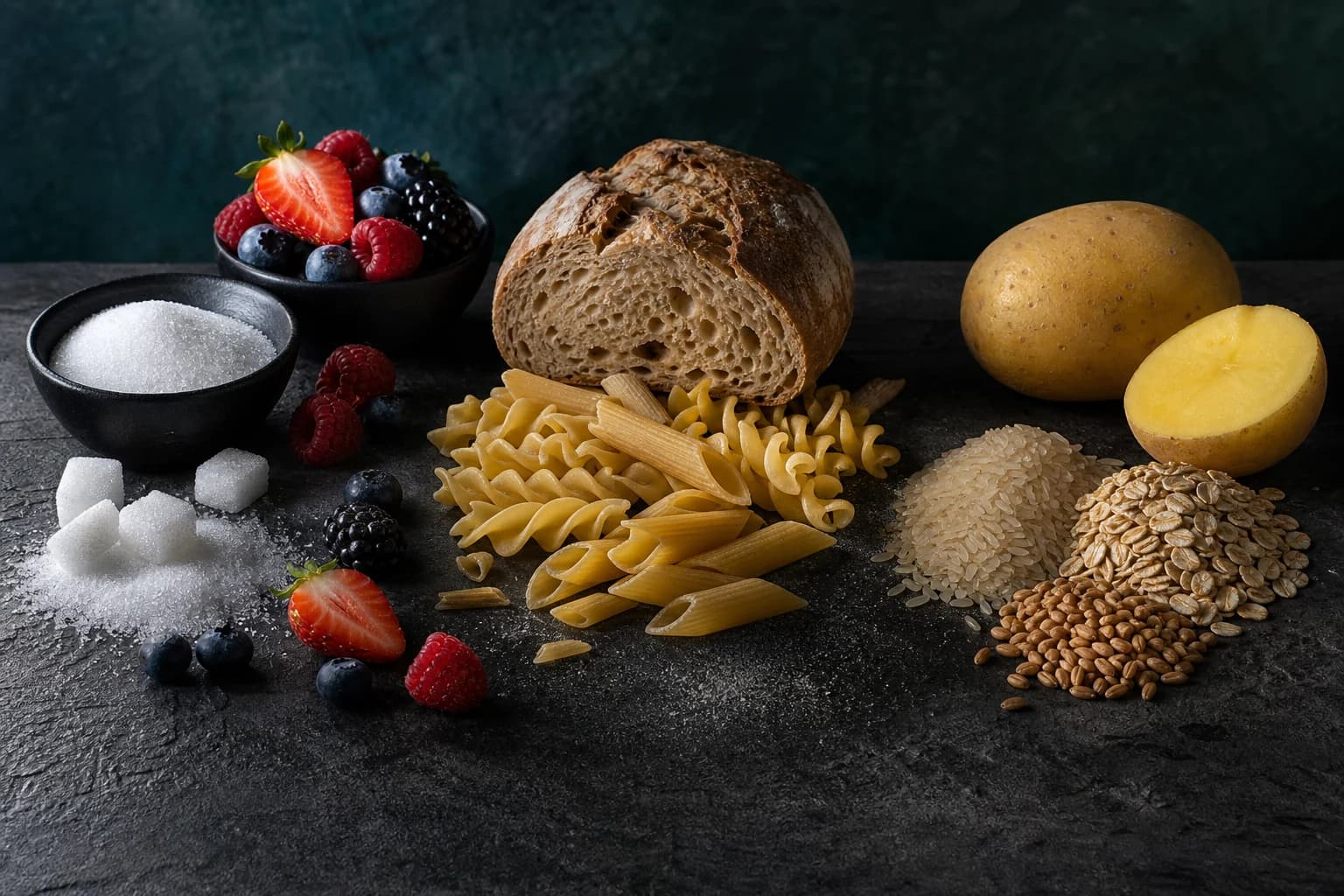
To make good choices at the table you need to know what you're really eating. "Carbs" are not one single thing: here are the types, explained simply.
Carbohydrates in 3 families
- Sugars (simple carbohydrates): sweets, fruit, milk.
- Starches (complex carbohydrates): bread, pasta, rice, potatoes.
- Fiber: the part we do NOT digest.
Simple sugars
- Glucose: the sugar the body uses for energy; it's what blood sugar measures.
- Fructose: the sugar in fruit; it's handled mainly by the liver.
- Sucrose: ordinary table sugar = glucose + fructose.
- Lactose: the sugar in milk.
Starches: glucose "in disguise"
A starch is nothing more than lots of glucose molecules linked together. That's why bread, pasta and potatoes — even though they aren't "sweet" — turn into glucose and raise blood sugar (as we explain in glucose and insulin).
Fiber: the "good" carb
Fiber is not digested: it doesn't raise blood sugar and slows the absorption of other sugars. This is where the idea of net carbs comes from = total carbs − fiber.
Why it matters on keto
All carbohydrates (except fiber) end up as glucose → insulin. Knowing which foods contain the most helps you say no with full awareness. Check them with the carb calculator and see the real glycemic impact.
🛒 Useful products
Affiliate links: if you buy through these links we may receive a small commission, at no extra cost to you.